
 Weather
  Webcams
  Attractions
  Gastronomy
  Tours
Tours  Events
 Alpine Passes Trail: Stage 4
Show all 5 images
Details
Description
Savognin is located in the middle of the largest nature park in Switzerland, the Parc Ela. Around the Alpine passes Albula, Julier, and Septimer, the park offers pristine nature, a diverse landscape, and a lived culture in the three languages Romansh, Italian, and German. The hiking trail leads through the village and over the medieval stone bridge, which crosses the Gelgia (Julia) river. Right after that, it goes uphill.
At the village exit, the Catholic Church Son Martegn stands out, a unique example of the influence of Italian Baroque north of the Alps. It was consecrated around 1677 and dominates the village image of Savognin with its massive facade.
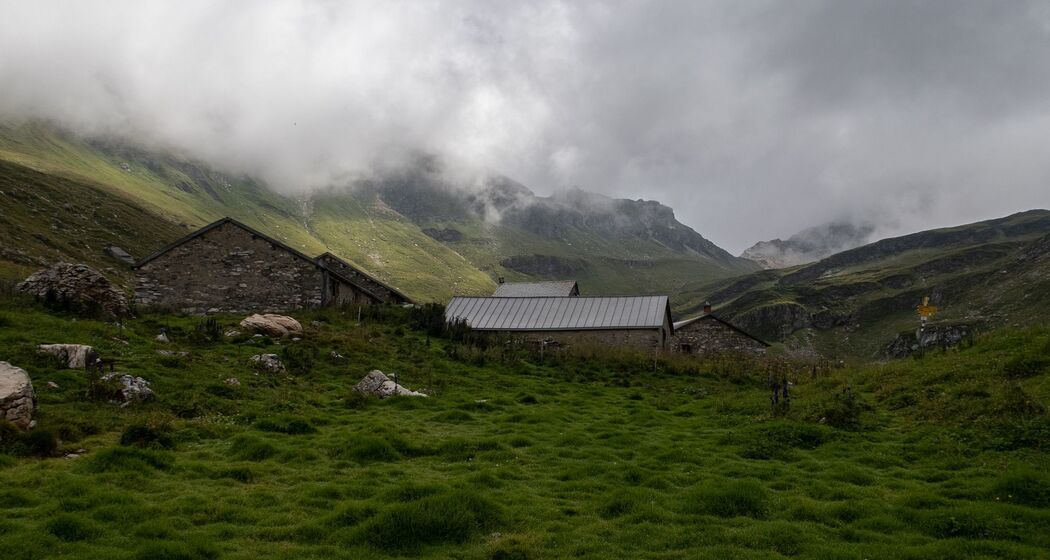
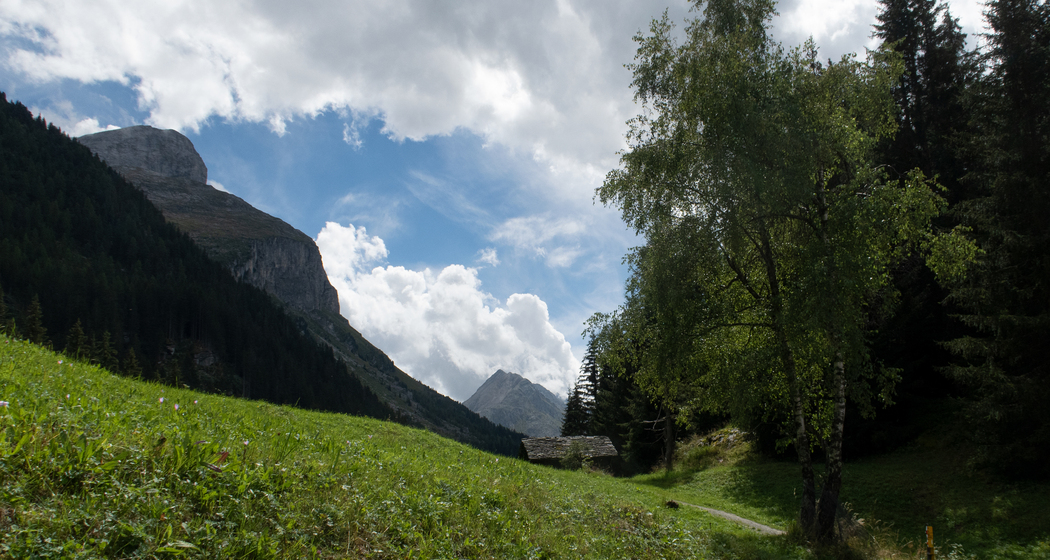
The hiking trail continues uphill over meadows; then gravel roads and paths alternate. To the right, the Ava da Nandro flows into the valley. Crossing the stream, you soon arrive in Radons. In the Val Schmorras, marmots raise an alarm meter by meter. The gravel road seems never-ending, stretching ever higher and further into the valley. At the Alp Schmorras (2277 m above sea level), the last part of the ascent follows across meadows up to the pass of the same name (2563 m above sea level).
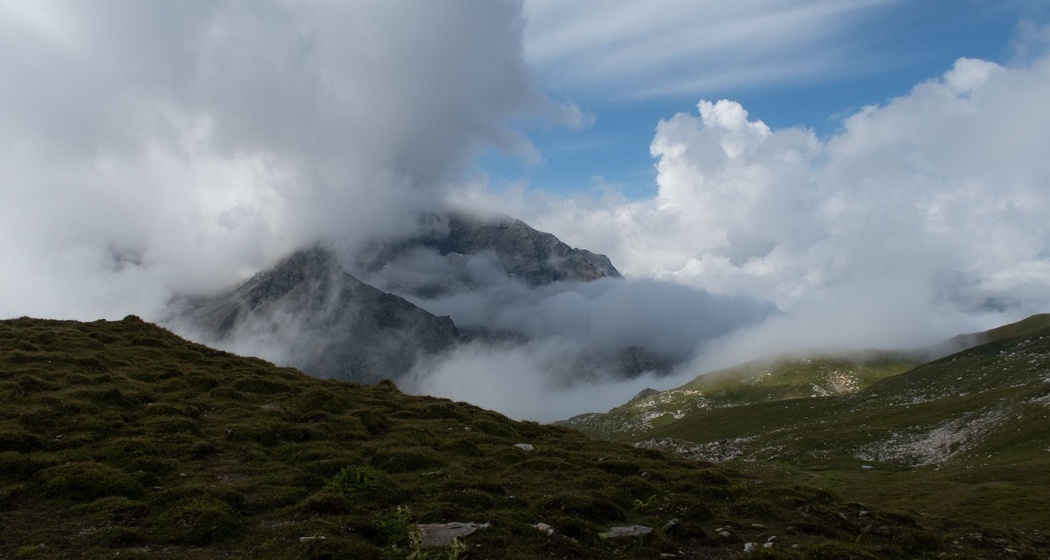
The path down to Alp Mos is partly hard to recognize. However, not to be overlooked is the rock wall Piz digl Gurschus above the Schmorras pass. Opposite: the Piz Grisch, resembling a volcano. After about five hours on the move, you reach the Alp Mos downhill in rugged terrain. More and more streams flow into the Aua da Mulegn. Its steadily growing size then shows itself in the two waterfalls below the alp. The varied path – full of blossoms and finally decorated with beautiful stone piles – ends at about 1800 m above sea level. Further downhill, the hiking continues on a gravel road. Recognizable from afar: the village Cresta with the old, listed church in a scenic location.
After Tgeas, the Aua da Mulegn is crossed again; some ant hills can be discovered in the forest. Shortly after, you arrive in Ausserferrera. The bouldering area "Magic Wood" just below the village is considered one of the best-known bouldering areas worldwide. In winter, the area is popular with ski tourers and ice climbers, who appreciate the remoteness and primitivity. A little further back in the valley lies Innerferrera. In the early 1960s, the construction of the dam of Lago di Lei and the associated power plant led to economic upswing. Special: the dam is on Swiss territory, while the reservoir is in Italy.


Responsible for this content: SwitzerlandMobility.