 Weather
  Webcams
  Attractions
  Gastronomy
  Tours
Tours  Events
 Bold Structures.
The Most Beautiful Viaducts
Landwasser Viaduct
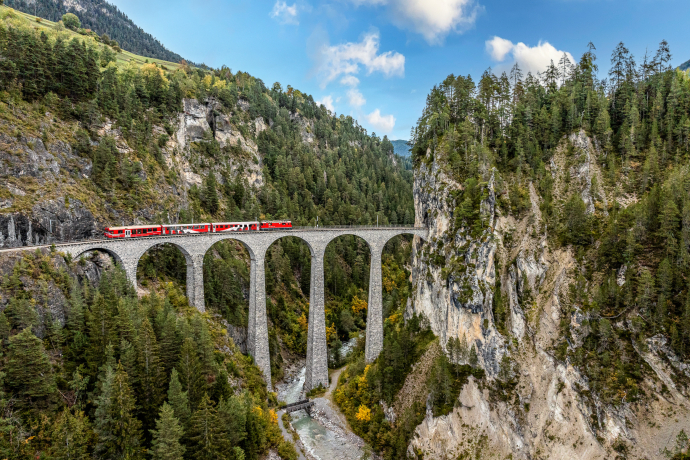
It's dark, then suddenly light again. The train emerges from a tunnel only to enter the next one immediately. In between stands a masterpiece of bridge-building, a showpiece of the Rhaetian Railway's UNESCO World Heritage route: The Landwasser Viaduct near Filisur. Since 1902, it has crossed the wild stream, which rushes by about 65 metres below, in a wide arc.
Interesting Facts & Highlights
Location & Arrival: The viaduct is located on the Albula Line near Filisur. For an external view, the village is the starting point for the signposted paths to the viewpoints. You can experience the crossing itself directly on the train.
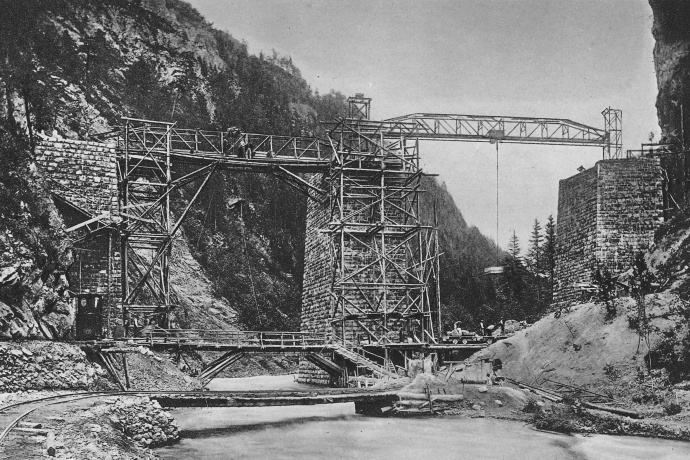
Construction & History: The 65-metre-high and 142-metre-long viaduct was built from 1901 to 1902. A special construction feature was the erection of the main pillars without external scaffolding to minimise costs and flood risks.
Experience & View: You can enjoy the famous view of the train entering the rock face from various viewing platforms. Both the Glacier Express and the Bernina Express cross the viaduct. The Landwasser World combines experiences such as the viaduct shuttle and, at the Albula Railway Museum, provides insights into the pioneering days of the railway.
Show all 3 images
Langwieser Viaduct
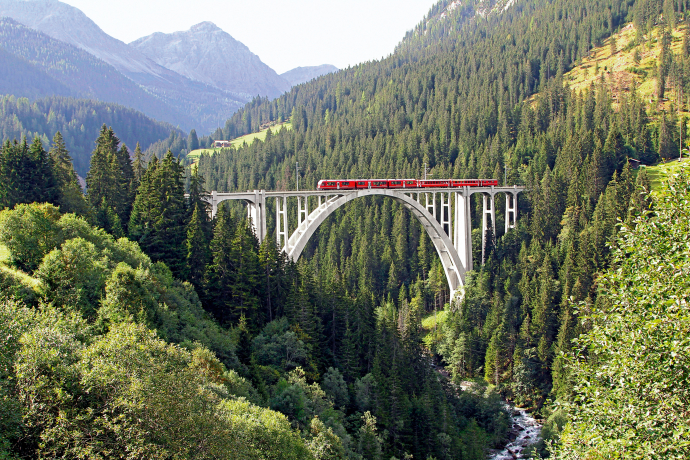
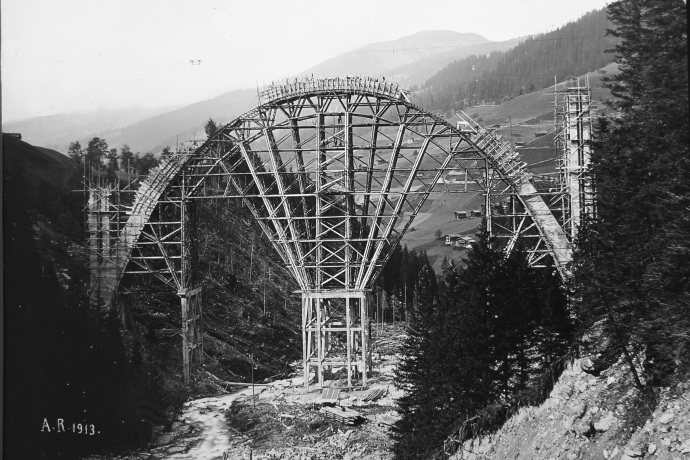
As a pioneering achievement of Grisons engineering, the Langwieser Viaduct has shaped the Schanfigg valley since 1914. At the time of its construction, it was the longest-span railway bridge in the world and is now considered a cultural asset of national importance. Those who travel by train up to the mountain world of Arosa can see the imposing structure from afar.
Interesting Facts & Highlights
Location & Arrival: The viaduct is on the Chur–Arosa railway line and spans the Plessur river near Langwies. Langwies station serves as a starting point for hiking trails that lead close to the structure.
Construction & History: At 285 metres long, it is the largest bridge of the Rhaetian Railway. The choice of a reinforced concrete construction was pragmatic: good building sand was abundant on site, while transporting building stones or steel parts into the remote valley would have been too costly.
Experience & View: A hike from Arosa to Langwies leads under the imposing structure and offers unique perspectives. In addition, the Viaduct Museum Langwies provides details on the construction history and design of the viaduct.
Show all 3 images
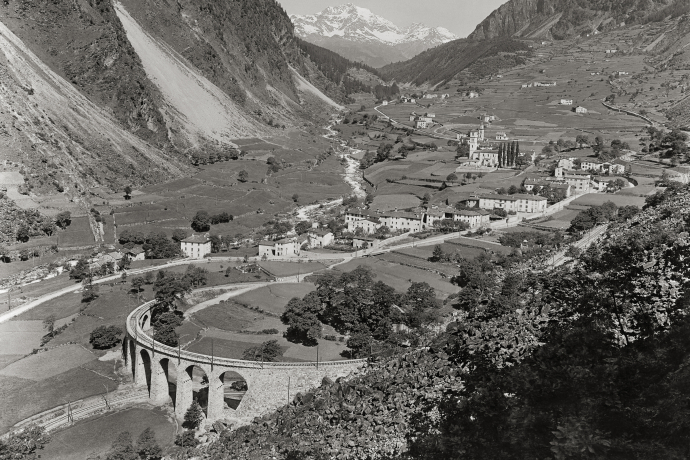
Brusio Circular Viaduct
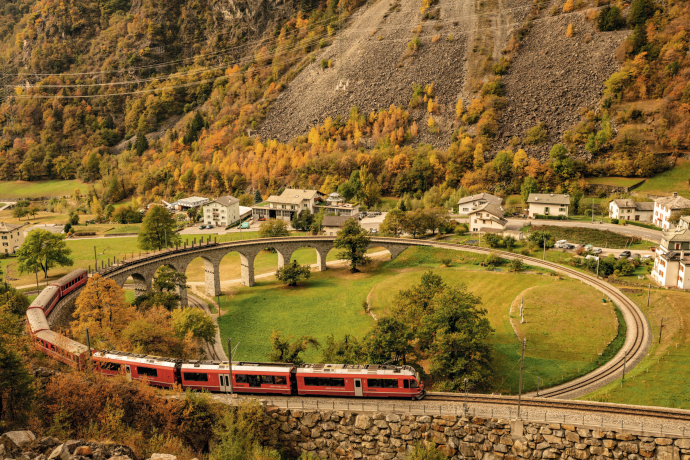
The most peculiar structure of the Rhaetian Railway is located in the Italian-speaking Valposchiavo. It is called «Viadotto elicoidale di Brusio», the Brusio Circular Viaduct. As early as 1907, resourceful engineers came up with the idea of building an open-air circular bridge instead of a spiral tunnel in the mountain. That's why you can now ride the «carousel» and enjoy the 360-degree landscape panorama in widescreen format.
Interesting Facts & Highlights
Location & Arrival: The viaduct is located near Brusio in Valposchiavo. The town's station is the ideal starting point to reach the structure in a few minutes' walk.
Construction & History: Built from 1907 to 1908, the open spiral tunnel serves exclusively to gain height. This allows the Bernina Line to overcome a gradient of 70 per mille in a very confined space. The structure is part of the UNESCO World Heritage route.
Experience & View: The crossing, including with the Bernina Express, offers a unique panorama. For an external view, a short circular walk from Brusio station is recommended, which leads close to the viaduct and back through the historic village centre.
Show all 3 images