
 Weather
  Webcams
  Attractions
  Gastronomy
  Tours
Tours  Events
 Cultural hike: Lüen - Castiel
Show all 4 images
Of terrible homesickness and a terrifying gallows - a village-to-village hike in the Schanfigg.
The hike mostly takes place on a traffic-free natural road. At Galgenbüel, the Arosa road must be crossed to ascend to Parvig.
Author: Hansjörg Gredig, ZHAW Life Sciences and Facility Management
Details
Description
The cozy ride with the Arosa railway gives you time for all kinds of discoveries. Deer in spring and autumn between Peist and Langwies, or the earth pyramids in the deeply eroded Gründjitobel. Below Lüen, it is worth taking a look into the Plessur gorge, where a steel pipe pressure line leads to the impressive power plant in the narrow valley floor. The power plant was built in 1914 at the same time as the Arosa railway. This made it possible for the railway to be electrically operated from the very beginning. Particularly attractive to visitors is the nostalgic company cable car from the railway track to the plant.
No Fear of the Gallows
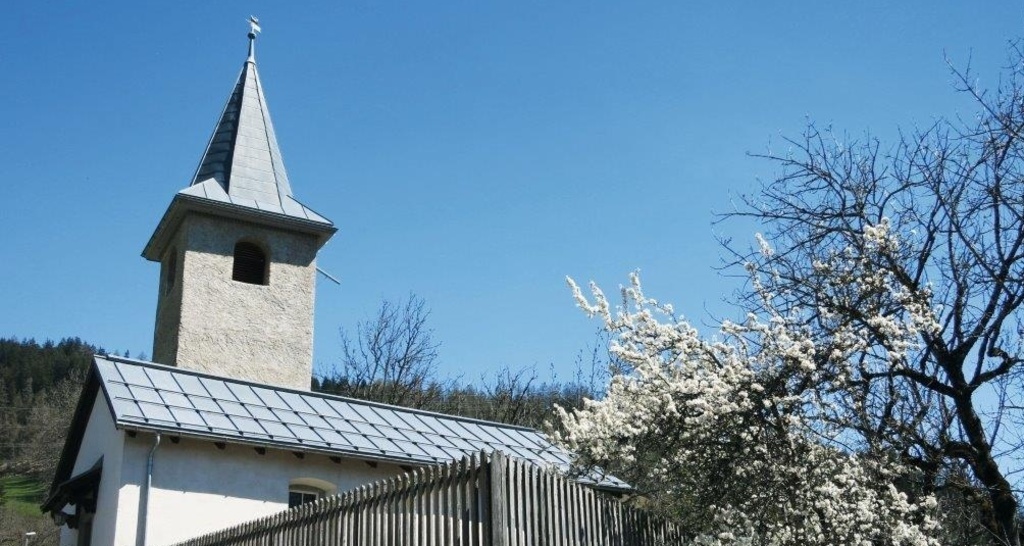
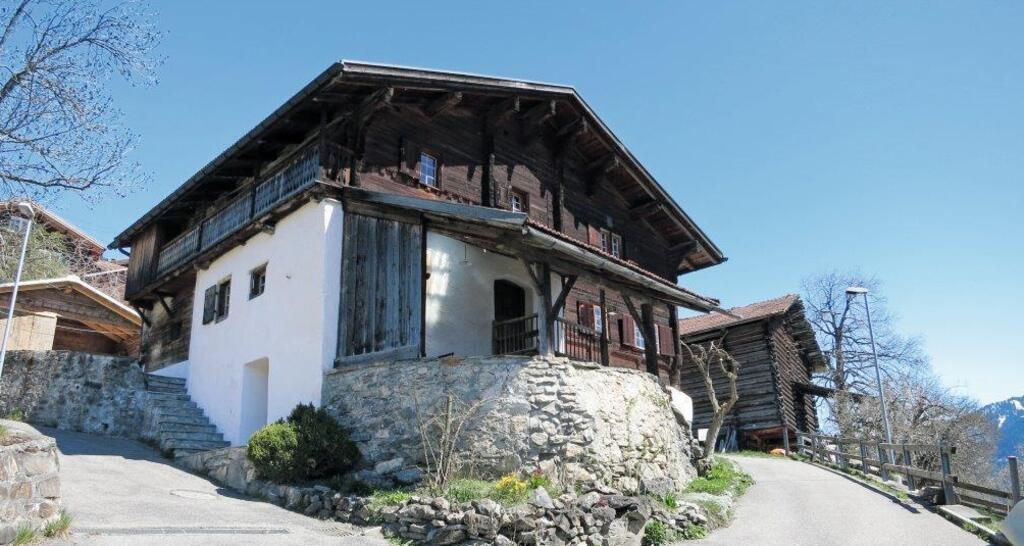
Our hike from the Lüen-Castiel station does go uphill – but don’t worry, the house motto on the best preserved station building dispels all doubts: “Where there is a will, there is a way.” This speaks of the spirit of the times, perhaps even the then chief engineer Gustav Bener himself, who enforced the construction of the railway in the most difficult terrain despite many setbacks in a very short time. After a few minutes on Bahnhofstrasse, we reach the sleepy Lüen, far from through traffic. The climate is kind to Lüen; grapes grow at the former washhouse by the path. On the small walk through the village, we notice the simple, shapely wooden houses. Some were built in the second half of the 19th century by master builder and carpenter Johannes Niggli from the neighboring village of Molinis. Today the “tavern” is also open. Petra Mohr and her husband have created an attractive little spot on the forecourt of a former stable. Even homemade cake is offered. Lüen is known among connoisseurs for something else: the inconspicuous small church on the edge of the village houses impressive paintings from the workshop of the Waltensburg master from the 14th century. Especially drastic and frightening is the depiction of the Massacre of the Innocents from Bethlehem.
We leave this place of culture and hike up on the initially paved, then gravel road towards Galgenbüel. The name says it all: here on the hill by the road – so everyone could see – the worst offenders were hanged. How many actually ended their lives on the gallows of Lüen we do not know. It was preferred to drive the poor sinners away rather than put them through an expensive trial.
"Glinzäli like on Parweig"
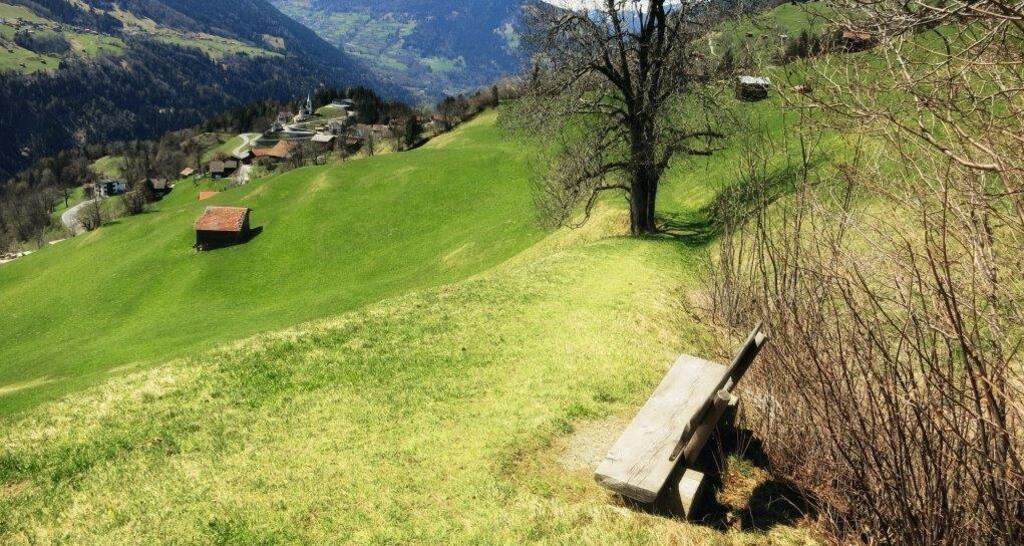
We leave Galgenbüel to the left (or in this case right) and follow the sign on the other side of the road towards Parvig. This rather flat meadow is an exception in the otherwise mostly steep Schanfigg. We touchingly remember the fate of the Lüen soldier who once in foreign military service found a Glinzäli, a yellow meadow flower, "just like on Parweig" on a meadow – and died of homesickness because of it. From the upper meadow edge of Parvig, we walk a bit along an asphalted land improvement road towards Castiel. After the Chatzenwald, the view opens up; below us lies Castiel with the church hill Carschlingg. Excavations have shown that the hill was already settled in prehistoric times. We sit on the inviting wooden bench and admire the magnificent view. Now we are almost at the destination of our hike; the way down to Castiel on the gently sloping meadow feels easy. The upper village of Castiel with its sun-browned houses has hardly changed in decades. The last stretch with its shade-giving trees brings us to Arosa road and thus to the post bus stop. At the village restaurant Pasunna right in front of the church, we quench our thirst. If there is no post bus running just now, we have the option to continue to Lüen-Castiel station, this time on the driving road.
Author: Hansjörg Gredig, ZHAW Life Sciences and Facility Management
Hidden Gem
Visit to the tavern in Lüen
Author: Hansjörg Gredig, ZHAW Life Sciences and Facility Management
Equipment
Directions
The cozy ride with the Arosa railway gives us time for all kinds of discoveries. Deer in spring and autumn between Peist and Langwies, or the earth pyramids in the deeply eroded Gründjitobel. Below Lüen, it is worth taking a look into the Plessur gorge, where a steel pipe pressure line leads to the imposing power plant in the narrow valley floor. The power plant was built in 1914 at the same time as the Arosa railway. So the railway could be electrically operated from the start. Particularly attractive for visitors is the nostalgic company cable car from the railway track to the plant.
No fear of the gallows
Our hike from the Lüen-Castiel station does go uphill – but don’t worry, the house motto on the best preserved station building disperses all doubts: “Where there is a will, there is a way.” Here speaks the zeitgeist, perhaps even the then chief engineer Gustav Bener himself, who enforced the construction of the railway in the most difficult terrain despite many setbacks in the shortest time. After a few minutes on Bahnhofstrasse, we reach the sleepy Lüen, far from through traffic. The climate is kind to Lüen; grapes grow at the former washhouse by the way. On the small walk through the village, we notice the simple, shapely wooden houses. Some were built in the second half of the 19th century by master builder and carpenter Johannes Niggli from the neighboring village of Molinis. Today the “tavern” is also open. Petra Mohr and her husband have created an attractive little spot on the forecourt of a former stable. Even homemade cake is on offer. Lüen is known among connoisseurs for something else: The inconspicuous small church on the edge of the village houses impressive paintings from the workshop of the Waltensburg master from the 14th century. Especially drastic and frightening is the depiction of the Massacre of the Innocents from Bethlehem.
We leave this place of culture and hike on the initially paved, then gravel road uphill towards Galgenbüel. The name says it all: Here on the hill by the main road – so everyone could see - the worst offenders were hanged. How many actually ended their lives on the gallows of Lüen, we do not know. It was preferred to drive the poor sinners away rather than put them through an expensive trial.
"Glinzäli like on Parweig"
We leave Galgenbüel to the left (or in this case right) and follow the sign on the other side of the road towards Parvig. This rather flat meadow is an exception in the otherwise mostly steep Schanfigg. Touchingly we remember the fate of the Lüen soldier who once in foreign military service found a Glinzäli, a yellow meadow flower, "just like on Parweig" on a meadow – and died of homesickness for it. From the upper meadow edge of Parvig, we walk a bit on an asphalted land improvement road towards Castiel. After Chatzenwald, the view opens up; below us lies Castiel with the church hill Carschlingg. Excavations have shown that the hill was already settled in prehistoric times. We sit on the inviting wooden bench and admire the magnificent view. Now we are almost at the destination of our hike; the way down to Castiel on the gently sloping meadow feels easy. The upper village of Castiel, with its sun-browned houses, has hardly changed in decades. The last stretch with its shade-giving trees brings us to Arosa road and thus to the post bus stop. At the village restaurant Pasunna right in front of the church, we quench our thirst. If there is no post bus running right now, we have the option to continue to Lüen-Castiel station, this time on the driving road.
Author: Hansjörg Gredig, ZHAW Life Sciences and Facility Management
Directions
Public Transport


Responsible for this content: Arosa Lenzerheide.

This website uses technology and content from the Outdooractive platform.