
 Weather
  Webcams
  Attractions
  Gastronomy
  Tours
Tours  Events
 Columbanus Way Switzerland - stage 16a. Balzers - Chur
Show all 5 images
Details
Description
St. Luzisteig. The north-south axis, which led over this pass until the 19th century, played an important role in various wars in European history, as this crossing led to the Bündner passes. The pass also formed part of the Roman road from Bregenz to Chur.
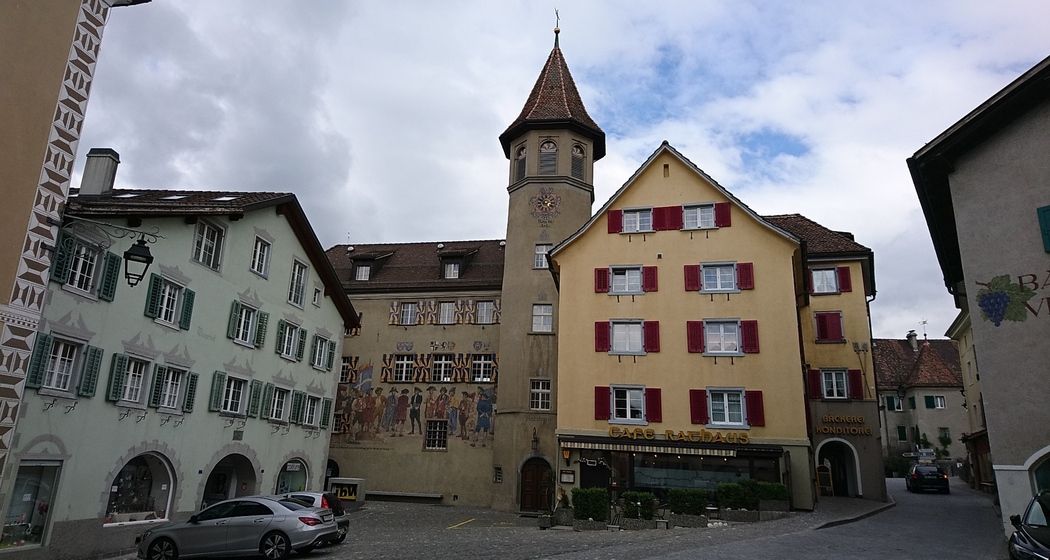
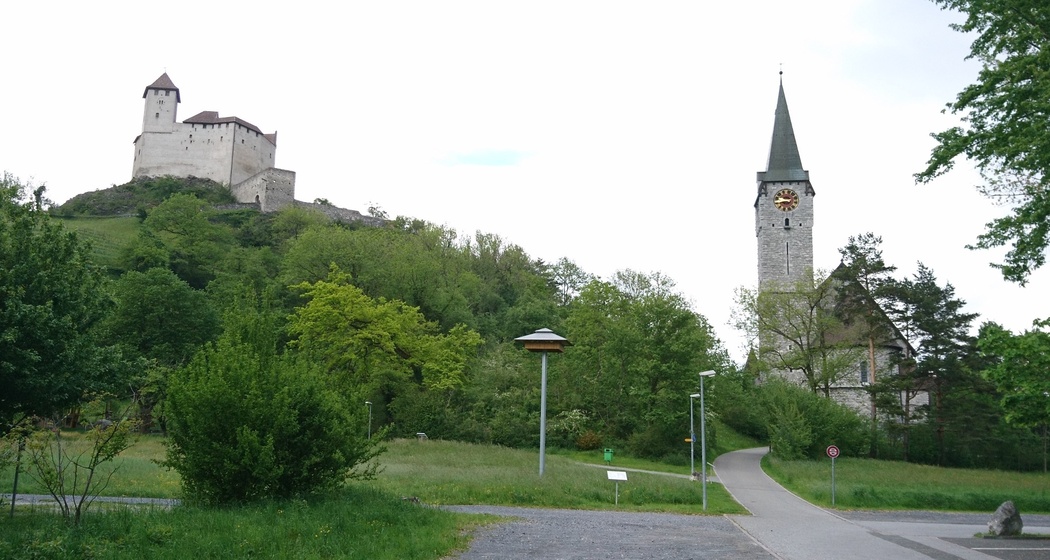
Maienfeld. From the 14th century, Walser people migrated into the area and founded several settlements. The old town with remains of the city wall, Brandis Castle as well as Salenegg Castle (Europe's oldest winery) belong to the protected local heritage of Switzerland. Wine-growing has played an important role since ancient times.
In the novel Heidi by Johanna Spyri, the community is regarded as the home of this literary character. A visit to the museum above the village is an experience.
In the St. Johannes asylum in Zizers, Zita, the last Empress of Austria and Queen of Hungary, spent the last years of her seventy-year exile from 1962 until her death in 1989.
Chur is the first city on the Rhine and the oldest city in Switzerland.
Hidden Gem
Directions
Shortly after the southern exit of Balzers village, we cross the border between Liechtenstein and Switzerland. Slightly ascending, we reach St. Luzisteig, a pass at 713 m above sea level that connects Balzers in the Principality of Liechtenstein with the wine town of Maienfeld in the canton of Graubünden.
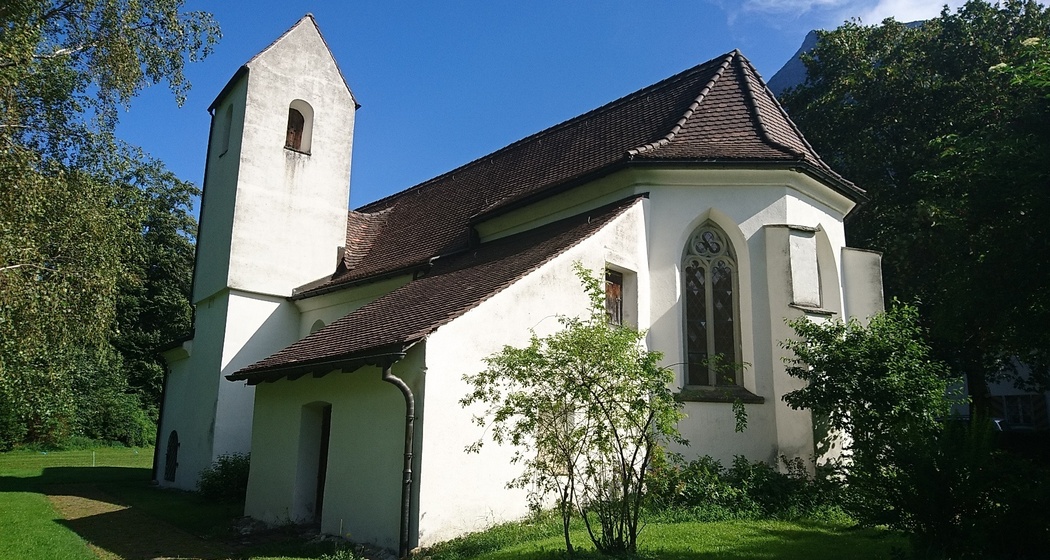
On the northern side of the pass summit lies the historic fortress St. Luzisteig with a gate from 1702. A little further on is the Steig Church, first mentioned in 831. The current Gothic building with a late Gothic choir was the mother church of Maienfeld and Fläsch until the beginning of the 15th century, decorated with murals from the 14th and 15th centuries.
We now hike through the well-known vineyard area of Bündner Herrschaft and enjoy wonderful views of Pfäfers, situated high above the left Rhine valley, with the imposing and widely visible baroque monastery church (built at the end of the 17th century).
PS1: From Pfäfers, a path leads towards Vättis with the Dragon's Hole (finds of tools and bear bones from 50,000 years ago) and to St. Martin (Walser settlement). From Vättis, another path leads over the Kunkel Pass to Tamins at the confluence of the Vorder and Hinterrhein rivers. This crossing existed as a mule track during Roman times.
PS2: From Bad Ragaz, a pleasant path leads into the Tamina Gorge to the thermal spring where the first bathhouse was built in 1630. The thermal spring serves the world-famous spa resort Bad Ragaz, also known for its open-air sculpture exhibition Triennale Bad RagArtz held every three years.
Jenins. The village lies at the foot of the Vilan mountain and belongs to the Bündner Herrschaft, a wine region favored by warm föhn winds. The Evangelical Reformed Church, dedicated to Saint Mauritius, is indirectly mentioned in a document from 1209.
Malans. Also a wine village of the Bündner Herrschaft. From Malans, a cable car leads up to an alp (1800 m above sea level), from where hikes to Falknis and Vilan can be undertaken. From the terrace of the mountain restaurant, one enjoys a wonderful view of the Rhine valley and the surrounding mountains.
The church of St. Cassian in Malans originally dates from the 6th century, was first mentioned in the 12th century and came into the possession of the bishop of Chur.
Between Malans and Zizers we cross the Landquart river, which flows into the Rhine at the village of the same name. We then pass Marschlins Castle, originally a water castle. The exceptional complex was founded by the bishop and probably dates from the mid-13th century. A predecessor building is not excluded.
Zizers. The village, located on the main traffic route from the Lake Constance area to Chur and further to the Bündner Alpine passes, is first mentioned in documents in 824. However, finds from the Bronze Age and Roman times suggest a much older settlement origin.
Chur. The Romans conquered the region in 15 BC and named the province Raetia. Probably as early as the 4th century AD, Chur was founded as the first bishopric north of the Alps. In 451, a bishop named Asinio is mentioned in documents. In the 6th century, Chur came under Frankish rule. Near an early medieval cemetery stood the burial church of St. Stephan, built in the 5th century. Presumably in the 8th century, the first building of St. Luzi followed immediately next to it.
Directions
Public Transport
Balzers can be reached by train and the Liechtenstein bus.
Chur is easily accessible by train.
Travel Information
By train to Sargans and from there by Liechtenstein bus 11 to the Määlsnerdorf stop in Balzers.
Chur can be reached directly by train and from the station on foot in a few minutes through the old town to St. Martin's church.


Responsible for this content: Verein IG Kolumbansweg Schweiz.

This website uses technology and content from the Outdooractive platform.