
 Weather
  Webcams
  Attractions
  Gastronomy
  Tours
Tours  Events
 Quellrheinweg A: Lake Toma - Tschamut
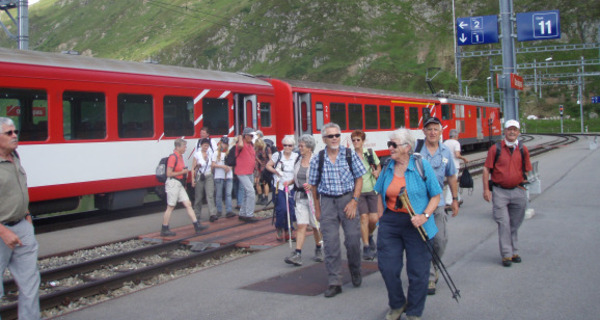
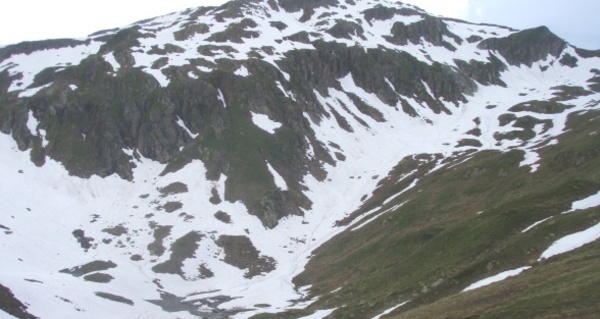
Show all 9 images
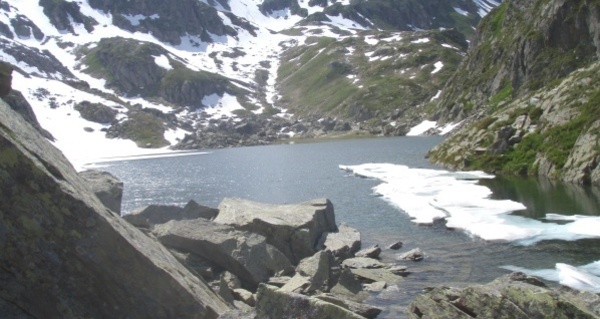
The Quellrheinweg includes a multi-day hike along the Vorderrhein from Lake Toma to Reichenau. On this long-distance hike, you experience the element of water in its various facets. The beauties of nature and culture in the Surselva region provide new surprises every day.
Details
Description
The selected route covers the Oberalppass-Lake Toma-Tschamut section. The highlight of this stage is undoubtedly the visit to Lake Toma, a magical place for many Central and Northern Europeans. From Lake Toma, the official source of the Rhine, to its mouth in Rotterdam, the Rhine travels 1320 kilometers. As a small and sometimes wild mountain stream, it rushes over stones and rocks, erodes deep gorges, floods floodplains, and rolls as a navigable mighty European river toward the North Sea.
From Oberalppass, the hike leads southeast through a flat bog, then crosses the steep slope Plauncas Cuflegl on a gently ascending path and reaches the edge of a nationally significant moor landscape with extensive flat bogs near Trutg Nurschalas. Through alpine meadows and on a zigzag path with stone blocks, you reach the highest point. From there, it is only 35 meters descent to Lake Toma.
Lake Toma, nestled in a hollow at the foot of Piz Badus, is probably unique in its beauty, magic, and international significance. Already Father Placidus Spescha (1752 - 1833) mentioned the place in his description of the Tavetsch valley as follows: "This 200-step wide and 400-step long lake is the basin from which the Vorderrhein originates. It is a wonderfully beautiful area and thus worthy to be the original source of such a river." Large flat stones with views of the lake or the green mats at the water invite you to rest and linger.
Where the water leaves the lake as the young Rhine, the hiking trail leads east down to the signpost at point 2174. From there, follow the road and partly the paths over Tgatlems, Crest Darvun, and Prau Mulins. This moorland of national importance with extensive flat bogs, alpine rose bushes, and alpine alders is particularly beautiful from mid-June to the end of August. At the end, it is another 500 meters through meadows and along the pass road to Tschamut.
Note(s)
The paths are marked white-red-white.
Ideal season: June to October (Variant B: July to September)
Dining options: Mountain guesthouse Piz Calmot and Ustria Alpsu (Oberalp Hospice), (Variant B: Badushütte SAC), Hotel Rheinquelle Tschamut
Public transport: Oberalppass (MGB station), Tschamut (MGB station)
See also
Surselva Tourism
Tel: 0041 81 920 11 00
Email: info@surselva.info
Internet: www.surselva.info
Maighelshütte SAC
Tel: 0041 81 849 15 51
Email: info@maighelshuette.ch
Internet: www.maighelshuette.ch
Badushütte - SAC Manegg
Tel: 0041 32 512 83 84
Email: reservation@badushuette.ch
Internet: www.badushuette.ch
Hidden Gem
The paths are marked white-red-white. Ideal season: June to October (Variant B: July to September). Dining options: Mountain guesthouse Piz Calmot and Ustria Alpsu (Oberalp Hospice), (Variant B: Badushütte SAC), Hotel Rheinquelle Tschamut. Public transport: Oberalppass (MGB station), Tschamut (MGB station).
Safety Note
Good footwear is recommended, as the varied terrain with mountain trails, field and forest paths, stream crossings, and steep slopes is very diverse. Some sections must be covered on hard surfaces. The area is well connected by public transport, allowing the long-distance hike to be interrupted as desired.
Equipment
Good hiking shoes with a good tread, weather-appropriate clothing (rain jacket/sun protection), change of clothes, first-aid kit, drinks, food, GPS device, possibly hiking poles.
Directions
Directions
Public Transport
By train from Andermatt or Disentis to Oberalppass
Travel Information
From Andermatt or Disentis to Oberalppass
Parking
At Oberalppass: Sufficient parking available
In Tschamut: No parking available!


Responsible for this content: Surselva Tourism.

This website uses technology and content from the Outdooractive platform.