
 Weather
  Webcams
  Attractions
  Gastronomy
  Tours
Tours  Events
 Pischa Drusatscha
Show all 4 images
Details
Description
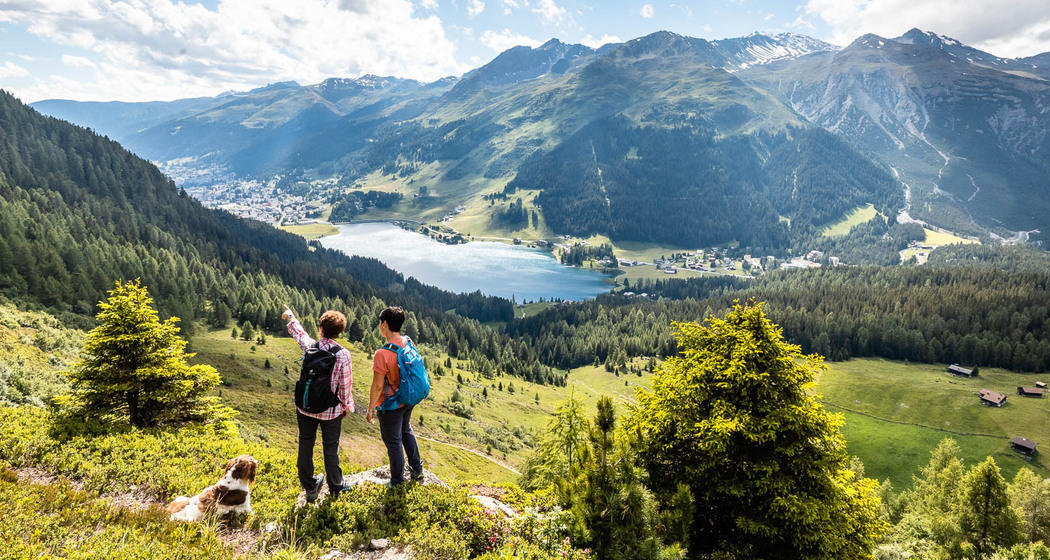
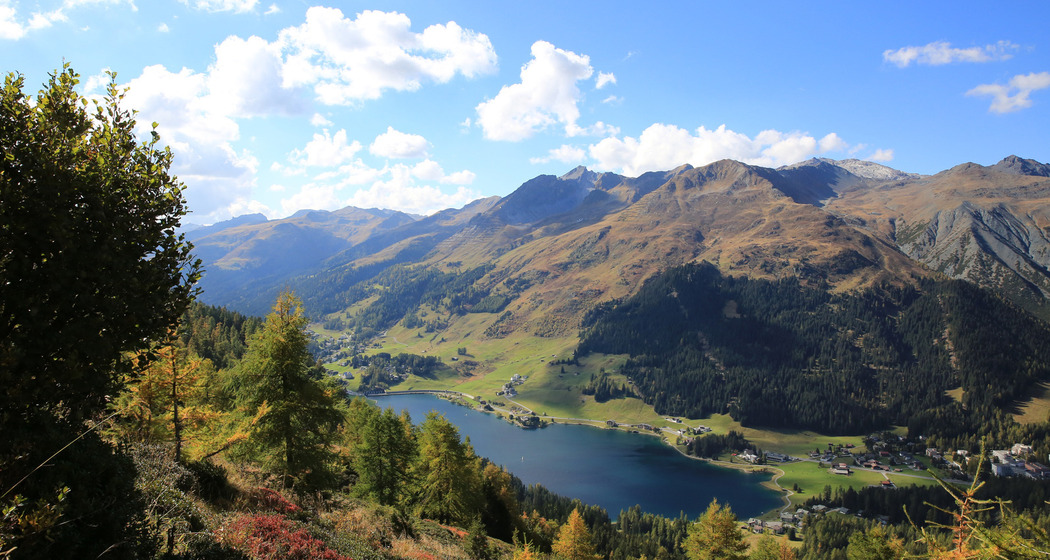
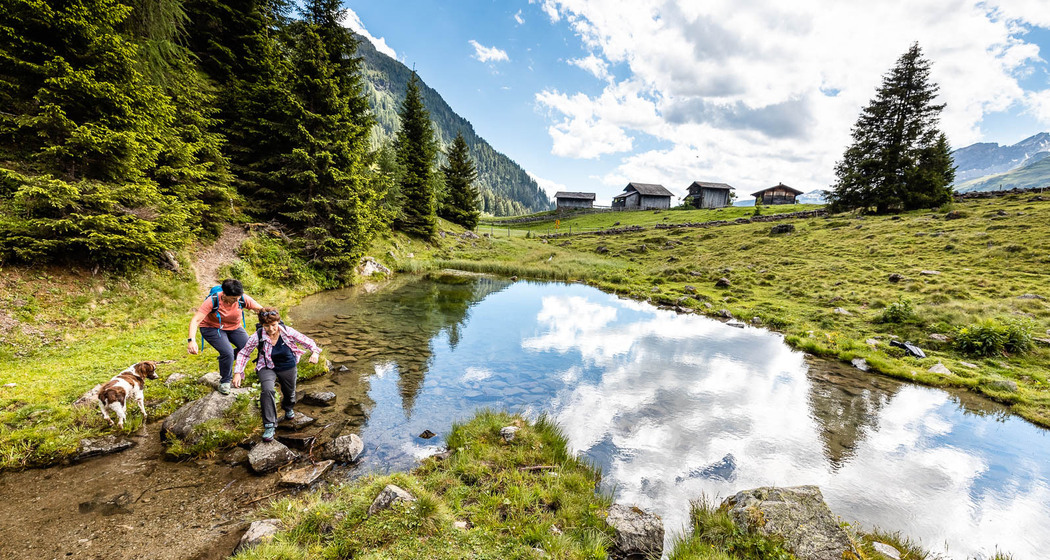
At the valley station of the Pischa cable car, you will find ample parking. Between the chapel and the restaurant Tschuggen, the hiking trail runs with a pleasant incline along the valley slope. After crossing Mattjisch Täli, it goes a bit steeper uphill to the Pischa mountain station. The entire area is under plant protection. The panoramic trail follows the ridge to the Hüreli. The descent goes through rocky scree and over pastures down to Chaltboden. Along the backside of the Seehorn, the path continues downhill through alpenrose fields to Alp Drusatscha, from where a magnificent view over Davos rewards your efforts. Following the Drusatschabächli further downstream over meadows to the upper end of Lake Davos and along the lakeside promenade to Davos Dorf.
Descent altitude difference: 927 m
Points of interest:
Tschuggen
At the restaurant Tschuggen, you can have a snack before starting your hike. You can reach Tschuggen by the PostBus, which runs over the Flüela Pass to the Engadin.
Pischa
The aerial cableway was opened in February 1967, today the cableway is only used for winter sports. The area was declared a total plant protection zone by the Davos landscape. Visitors will see magnificent flower fields, especially along the sunny slopes of the Flüela meadows. From the “Pischahoore” many streams flow down towards the Mönchalp valley, and there are also smaller waterfalls.
Ridge hike to Hüreli
The Hüreli ridge limits the Mönchalp valley to the southwest.
Drusatscha
Dreamy forest meadows inviting to rest.
Lake Davos
A pedestrian viaduct brings you to Lake Davos. Follow the promenade path along its eastern shore to the end of the lake, then continue on the footpath to Davos Dorf. Davos – the highest town in Europe – offers all the amenities of a (small) town and is at the same time surrounded by an intact mountain and natural landscape. Davos was settled by the Walser in the 13th century. The spa history of Davos begins in 1853 connected with the name Alexander Spengler. He soon recognized the healthy effect of the Davos climate and promoted it. Together with W. J. Holsboer, Spengler founded the Spengler-Holsboer spa institution in 1868. With the construction of the railway line from Landquart to Davos, a new development began: hotels, guesthouses, sanatoriums, and villas sprang up like mushrooms. Many foreign guests enjoyed their stay in the snow and brought new ideas and winter sport equipment to Davos. This made Davos a well-known winter sport resort already in early years. Today, the mountain clinics serve less for tuberculosis treatment and more for therapy of allergic and infectious diseases of the airways and lungs. Davos today has 13,000 inhabitants and offers a variety of options not matched by any other mountain holiday resort in Europe. Davos is a holiday, sports, congress, health, research, and cultural town.
Note(s)
The route includes not only 549 m ascent but also 927 m descent.
In Davos Klosters hikers and mountain bikers use the same trails without restrictions. This applies to the entire canton of Graubünden and is unique in the Alps.
See also
Destination Davos Klosters
Davos Destinations Organization (Cooperative)
Talstrasse 41
CH-7270 Davos Platz
Tel: +41(0)81 415 21 21
E-Mail: info@davos.ch
Internet: www.davos.ch
Hidden Gem
Safety Note
Directions
Directions
Public Transport
Travel Information
By car to Davos
- Route 28 Landquart - Davos
- Landwasserstraße Thusis - Davos
Parking


Responsible for this content: Destination Davos Klosters.

This website uses technology and content from the Outdooractive platform.